

Using an Air Fryer in Your RV: Understanding Power Draw, Inverter Requirements & Outlet Compatibility
The RV lifestyle offers freedom and adventure, but it also comes with unique challenges—especially when it comes to cooking in a compact space with limited power resources.
Air fryers have become incredibly popular kitchen devices for RV enthusiasts due to their versatility, efficiency, and the delicious meals they can produce. However, before you plug in that air fryer and start making crispy french fries on your next camping trip, it’s crucial to understand the electrical demands and compatibility issues specific to RVing.
RV Air Fryers & Power Solutions

CHEFMAN 2 Qt Mini Air Fryer – Digital Space-Saving Compact Air Fryer with Nonstick and Dishwasher Safe Basket, Quick & Easy Meals in Minutes, Features Digital Timer and Shake Reminder – Black
CHEFMAN 2 Qt Mini Air Fryer – Digital Space-Saving Compact Air Fryer…
VIEW LATEST PRICE
NEWBULIG Air Fryer, Compact Digital 3 Qt Airfryer with Nonstick Plate & Dishwasher Safe Basket, Quick Easy Meals, Features Auto Shutoff and Simple Touchscreen, Ideal for Small Spaces
NEWBULIG Air Fryer, Compact Digital 3 Qt Airfryer with Nonstick Plate &…
VIEW LATEST PRICE
COSORI Air Fryer 2.1 QT, Small & Mini 4-in-1 airfryer Ideal for Simple Meals and Snack, Easy to Leftover Food to Crispy, Up to 97% Less Oil, 30 In-App Recipes, Nonstick & Dishwasher-Safe Basket
COSORI Air Fryer 2.1 QT, Small & Mini 4-in-1 airfryer Ideal for…
VIEW LATEST PRICEThis comprehensive guide will help you navigate the world of using an air fryer in your RV, from power consumption concerns to inverter requirements and outlet compatibility.
How much power does an air fryer draw in an RV?
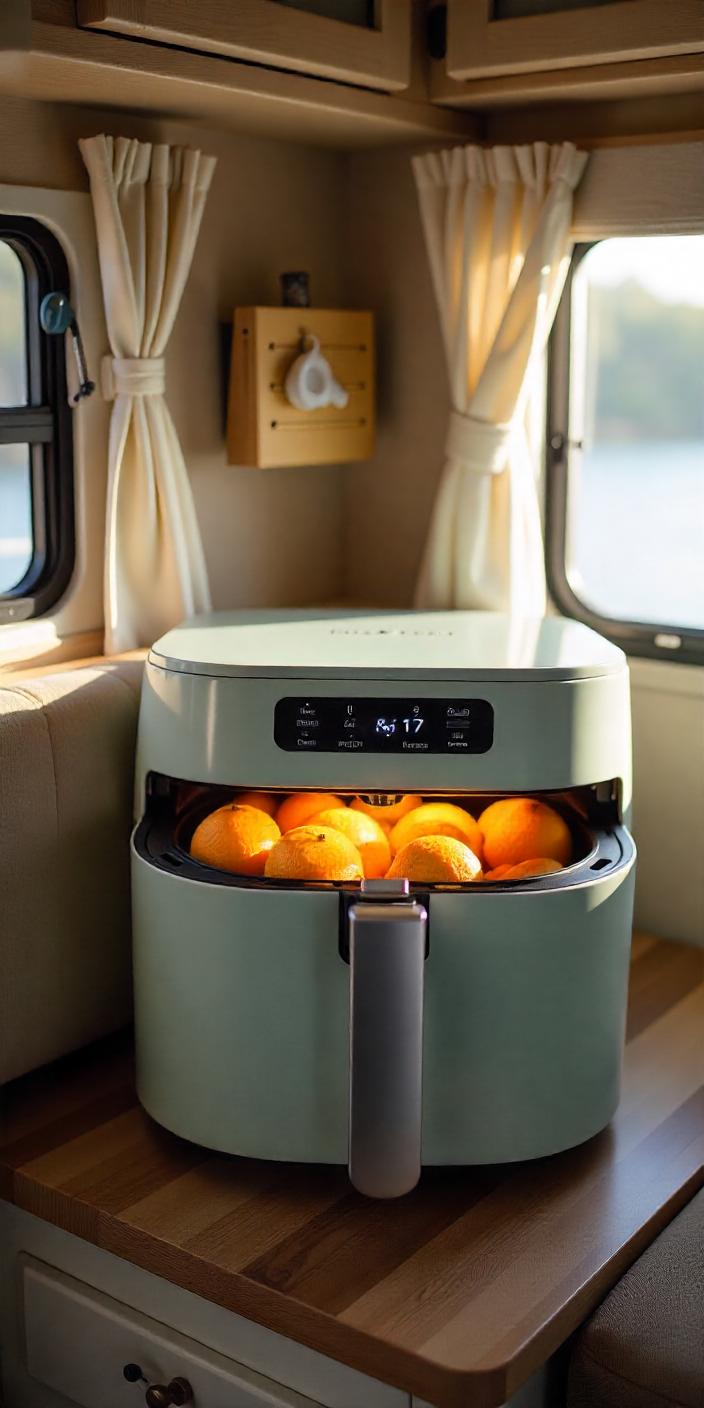
Understanding the power draw of an air fryer is essential for RV owners who want to incorporate this convenient cooking appliance into their mobile kitchen setup. Unlike in a traditional home where electrical capacity is rarely a concern, the limited power availability in an RV means that every watt counts.
Air fryers typically consume between 1000 and 1800 watts while operating, which translates to a significant draw on your RV’s electrical system. This high wattage requirement places air fryers in the category of high draw appliances, alongside items like microwaves, electric heaters, and toasters.
Before integrating an air fryer into your RV lifestyle, it’s crucial to assess whether your electrical system can handle this additional load without tripping breakers or damaging your wiring.
What is the typical wattage range for RV-friendly air fryers?
When shopping for an air fryer to use in your RV, paying attention to the wattage specification is paramount. Most air fryers on the market range from 1000 to 1800 watts, but there are increasingly more options designed specifically with the RV lifestyle in mind.
A small air fryer with a wattage between 800 and 1200 watts offers a good balance between cooking performance and power consumption for most camper setups. Many RV owners in online forums recommend looking for models under 1500 watts to minimize the risk of overloading your electrical system.
Some compact Ninja air fryer models, for instance, operate at around 1000 watts, making them suitable choices for RVing. When browsing air fryer specifications, remember that lower wattage models may take slightly longer to cook your meals, but the trade-off in electrical efficiency often makes them more practical for RV travel.
Can my RV electrical system handle an air fryer’s amp draw?

The amp draw of an air fryer is a critical consideration for RV owners.
To calculate the amperage, divide the air fryer’s wattage by the voltage of your RV’s electrical system (typically 120 volts in North America). For example, a 1500-watt air fryer draws approximately 12.5 amps (1500 ÷ 120 = 12.5).
Most RVs have either 30-amp or 50-amp service, which dictates the total amount of power available. In a 30-amp RV, you have about 3,600 watts (30 amps × 120 volts) to distribute across all appliances.
This means that running a 1500-watt air fryer would consume over 40% of your available power, leaving limited capacity for other devices like air conditioning units, microwaves, or electric water heaters.
RV owners with 50-amp service have more flexibility, with up to 12,000 watts available. However, even with 50-amp service, you need to be mindful of which circuit you’re using, as individual breakers within your RV may be rated for only 15 or 20 amps.
How to calculate if your RV circuit can support an air fryer
To determine if your RV’s electrical system can support an air fryer, you need to perform a simple calculation while considering what other appliances might be running simultaneously.
Start by identifying the amperage rating of the circuit where you plan to plug in your air fryer. Most RV interior outlets connect to a 15 or 20-amp circuit breaker. Next, check the wattage of your air fryer and convert it to amps (watts ÷ 120 volts = amps).
For example, a 1200-watt airfryer will draw approximately 10 amps. Now, assess what other devices might be running on the same circuit.
If you’re already running a 700-watt microwave (about 5.8 amps) on the same circuit, adding the air fryer would push your total amp draw to around 15.8 amps, which could trip a 15-amp breaker.
Many RV owners use a simple rule of thumb: never load a circuit beyond 80% of its rated capacity for continuous use, meaning a 15-amp circuit should ideally not exceed 12 amps of continuous draw. This calculation helps prevent overheating of wiring and reduces the risk of electrical fires while boondocking or at a campground.
Which inverter size do I need to run an air fryer while RVing?
When you’re not connected to shore power at a campground pedestal, an inverter becomes essential for running AC appliances like an air fryer using your RV’s battery power. Selecting the appropriate inverter involves understanding not just the wattage requirements of your air fryer, but also the type of electrical current it produces. For most air fryers, you’ll need an inverter rated at least 25-30% higher than the appliance’s wattage to account for the initial surge when the heating element first activates.
This means for a 1500-watt air fryer, you should consider an inverter rated for at least 2000 watts. Remember that when boondocking or traveling off-grid, your ability to run an air fryer will be limited by both your inverter capacity and your battery bank’s size.
Many RVers find that upgrading their battery system and adding solar panels becomes necessary when they want to incorporate high-draw cooking appliances into their off-grid lifestyle.
Understanding pure sine wave vs. modified sine wave inverters for air fryers
The type of inverter you select can significantly impact how well your air fryer operates in your RV. Inverters come in two main varieties: pure sine wave and modified sine wave.
Pure sine wave inverters produce electricity identical to what you get from household outlets and are generally the recommended choice for sensitive electronics and appliances with motors or heating elements, such as air fryers.
While more expensive, a pure sine wave inverter ensures your air fryer will operate as efficiently as it would at home, with proper temperature regulation and timer function. Modified sine wave inverters are less expensive but produce a “choppier” electrical current that can cause some air fryers to run less efficiently, make unusual noises, or even sustain damage over time.
Many RV forums are filled with stories of RVers who learned this lesson the hard way when their air fryer or other kitchen device performed poorly or failed prematurely when powered by a modified sine wave inverter. The investment in a quality pure sine wave inverter typically pays off in better performance and longevity of your appliances.
Battery capacity requirements when using an air fryer off-grid
Using an air fryer while boondocking presents a significant challenge for your RV’s battery system.
To calculate your battery needs, consider how long you plan to run the air fryer and its power consumption. For example, a 1200-watt air fryer running for 30 minutes will consume approximately 600 watt-hours of energy (1200 watts × 0.5 hours). Most RVs come equipped with lead-acid batteries rated in amp-hours (Ah).
To convert watt-hours to amp-hours for a 12-volt battery system, divide by 12 (600 watt-hours ÷ 12 volts = 50 Ah). However, since it’s recommended to discharge lead-acid batteries to only 50% of their capacity to preserve battery life, you would need a battery bank with at least 100 Ah capacity just to run the air fryer for 30 minutes.
This calculation doesn’t account for the efficiency loss in the inverter (typically 10-15%) or other devices drawing power simultaneously. Many serious off-grid RVers upgrade to lithium batteries, which can be discharged to 80-90% of their capacity and provide more usable power in the same physical space.
A robust battery setup, potentially paired with solar panels, becomes essential for RVers who want to cook regularly with an air fryer while enjoying the freedom of boondocking.
Can I run an air fryer and other appliances simultaneously with my inverter?
Running multiple appliances simultaneously through an inverter requires careful planning and an understanding of your system’s limitations.
If you want to use your air fryer while other devices are operating, you’ll need to add up the total wattage to ensure your inverter can handle the combined load. For instance, if you’re running a 1200-watt air fryer and a 900-watt coffee maker simultaneously, you’ll need an inverter rated for at least 2100 watts, plus additional capacity for the starting surge.
Many RVers with extensive electrical knowledge install a battery monitor that displays real-time information about power draw and battery capacity.
This device helps prevent overloading your system and provides valuable feedback about your energy usage patterns.
When boondocking, RV owners often develop a schedule for using high-draw appliances, perhaps running the air fryer during peak solar production times while avoiding simultaneous use of other power-hungry devices like an instant pot or electric cooker.
Some RVers even switch to propane alternatives for certain cooking functions to reduce their electrical demand while still enjoying the convenience of an air fryer for specific meals.
What are the best outlets to plug an air fryer into when cooking in an RV?

Selecting the right outlet for your air fryer is crucial for safe and efficient operation in your RV kitchen. Most RVs have several types of outlets, each connected to different circuits with varying capacities. The standard 110V/120V outlets in your RV are typically rated for 15 or 20 amps, which may be sufficient for smaller air fryers but could be problematic for larger models.
When possible, opt for outlets that are on their own dedicated circuit to minimize the risk of overloading. Some newer RVs feature special high-amperage outlets specifically designed for appliances like microwaves, and these can be ideal for air fryers as well.
It’s essential to avoid using extension cords with air fryers in an RV, as they can create fire hazards due to the high current draw. If the built-in outlets in your RV kitchen aren’t conveniently located, consider having a certified RV technician install a new outlet rather than relying on potentially dangerous temporary solutions.
30-amp vs. 50-amp service: outlet considerations for air fryers
The type of electrical service your RV uses—either 30-amp or 50-amp—significantly impacts your ability to run an air fryer along with other appliances.
In a 30-amp RV, you’re limited to approximately 3,600 watts of total power, meaning a 1500-watt air fryer consumes nearly half of your available electricity. This limitation means you’ll need to be strategic about which other devices are running simultaneously.
For example, you might need to temporarily switch off your air conditioning unit while using the air fryer to avoid tripping the main breaker at the campground pedestal. RVs with 50-amp service have a much higher capacity (up to 12,000 watts) and can generally accommodate an air fryer alongside other appliances without issue.
However, even in a 50-amp RV, individual circuits inside the vehicle may still be limited to 15 or 20 amps, so you’ll need to be aware of which appliances share a circuit with your chosen outlet.
Many experienced RVers recommend plugging high-draw appliances like air fryers directly into outlets that connect to the main panel rather than those on branch circuits that might also power lights, entertainment systems, or other devices.
Can I use an air fryer with my RV’s solar power system?
Using an air fryer with a solar power setup is possible but requires a substantial system designed specifically for high-draw appliances. A typical RV solar installation might include several 100-watt panels connected to a battery bank through a charge controller.
To run a 1200-watt air fryer for 30 minutes daily, you would need to generate and store sufficient power—approximately 600 watt-hours plus inverter losses. This might require 400-600 watts of solar panel capacity under ideal conditions, along with a battery bank of at least 100 amp-hours. Weather conditions, panel orientation, and seasonal changes in sunlight will all affect your system’s capability.
Many RVers who rely heavily on solar power opt for efficient cooking alternatives when possible, saving the air fryer for days with abundant sunshine or when they’ve built up excess battery capacity. Some solar-equipped RVers use their air fryer during midday hours when their panels are producing at peak efficiency, which helps minimize battery drain.
Forums devoted to RV solar setups often feature discussions about successfully incorporating air fryers into off-grid power systems, with many users sharing their specific panel configurations and battery management strategies.
Avoiding circuit breaker trips when using an air fryer in your RV
Circuit breaker trips can quickly ruin an RV meal and potentially damage your electrical system. To avoid this frustrating situation when using your air fryer, start by mapping your RV’s electrical system to understand which outlets share circuits.
This knowledge allows you to strategically distribute your electrical load. Before turning on your air fryer, temporarily switch off or unplug unnecessary devices on the same circuit. Many RV owners even create a checklist or diagram identifying which appliances can run simultaneously without overloading their system.
Be particularly cautious with combination devices that draw significant power, such as convection/microwave ovens or instant pot cookers. Another effective strategy is to stagger your use of high-draw appliances—perhaps using the microwave to defrost, then switching it off before activating the air fryer to cook. Some RVers install energy management systems that automatically prioritize certain circuits and can temporarily disconnect non-essential loads when power-hungry appliances like air fryers are in use.
These systems add a layer of protection against breaker trips and potential damage to your RV’s wiring, offering peace of mind while cooking during your travels.
How does an air fryer compare to other RV cooking appliances?
When evaluating cooking options for your RV kitchen, comparing the air fryer to traditional RV cooking appliances reveals significant advantages and trade-offs. Unlike propane-powered options that come standard in most RVs, air fryers require electrical power but eliminate concerns about propane levels and ventilation requirements.
Air fryers typically consume less electricity than full-sized electric ovens while offering faster cooking times, making them more efficient for RV travel. Many RVers appreciate that air fryers don’t generate as much heat inside their camper compared to conventional ovens, which is particularly valuable during summer trips. Additionally, air fryers are remarkably versatile, capable of roasting, baking, and grilling in addition to their namesake frying function.
This multi-purpose nature makes them especially valuable in compact RV kitchens where space for multiple cooking devices is limited. The growing popularity of air fryers in the RV community is evident in the numerous RV lifestyle forums where owners enthusiastically share recipes specifically designed for air fryer cooking while on the road.
Air fryer vs. microwave: power consumption in the RV lifestyle
When comparing air fryers and microwaves for RV use, power consumption becomes a key differentiating factor. Both appliances typically draw similar wattage—between 700 and 1800 watts—but they use electricity quite differently.
Microwaves generally draw their full wattage continuously while operating but run for shorter periods, often just 1-5 minutes per use. In contrast, air fryers cycle their heating elements on and off to maintain temperature, meaning they don’t draw their maximum wattage constantly.
However, air fryers typically run for longer periods, often 15-30 minutes per cooking session. This cycling behavior makes air fryers more compatible with inverter and battery setups, as the intermittent power draw is less likely to overtax your system compared to the sustained high draw of a microwave.
From an RV lifestyle perspective, many travelers find that while microwaves excel at reheating leftovers and quick preparation, air fryers produce superior cooking results for crispy foods like french fries, chicken wings, and other favorites that would be soggy if microwaved.
Some RVers opt to install both appliances but use them strategically—the microwave when connected to shore power at a campground, and the air fryer when operating on solar or battery power while boondocking.
Air fryer vs. conventional RV oven
When it comes to cooking in your recreational vehicle, choosing between an air fryer and the conventional RV oven that comes built-in can significantly impact your meals and overall experience. Both options have distinct advantages and limitations worth considering before your next road trip.
Conventional RV Ovens Advantages
– Already built into most RVs
– Familiar cooking method for most people
– Can handle larger items like whole chickens or casseroles
– No additional storage space required
– No extra appliance to purchase
– Works without electricity (typically propane-powered)
Disadvantages:
– Notoriously uneven heating (often hotter in back)
– Limited temperature control accuracy
– Slower preheating and cooking times
– Uses more propane than other cooking methods
– Can significantly heat up your RV interior
– Often smaller than residential ovens
Air Fryers Advantages
– Faster cooking times
– More energy efficient
– Even cooking results
– Minimal heat generation inside the RV
– Versatility (fry, bake, roast, reheat)
– Easy cleanup with non-stick components
– No preheating required for most models
Disadvantages
– Requires storage space
– Uses electricity (may be an issue boondocking)
– Smaller capacity than conventional ovens
– Additional purchase cost
– Some models can be noisy
– May not replicate traditional oven results for all foods
Considerations for RV Travelers
The best choice ultimately depends on your cooking style, travel habits, and available resources. Many RV enthusiasts opt to use both: the conventional oven for larger meals when hookups are available, and an air fryer when boondocking with generator power or when cooking smaller, quick meals.
If you frequently camp without electrical hookups, the conventional propane oven may be more practical. However, if you typically stay at campgrounds with electrical connections, an air fryer can provide superior cooking results while using less energy.