

Owning a pop-up camper opens up a world of adventure and freedom, but it also comes with responsibilities—one of the most important being proper insurance coverage. Whether you’re a seasoned RV enthusiast or a first-time pop-up camper owner, understanding how to insure your travel trailer is essential for protecting your investment and enjoying your outdoor experiences with complete peace of mind.
This comprehensive guide will walk you through everything you need to know about pop-up camper insurance, from coverage options to costs and claims processes.
Do I Need Insurance for My Pop-Up Camper?
Many new pop-up camper owners wonder if they actually need to insure their travel trailer. Unlike auto insurance for your primary vehicle, insurance for a pop-up camper isn’t always legally mandated in every state.
However, deciding whether you need insurance involves more considerations than just legal requirements. Your travel trailer represents a significant investment, and protecting it with the right insurance policy can save you from potentially devastating financial losses should something unexpected occur while traveling or even when in storage.
Legal Requirements for Pop-Up Camper Insurance
The legal landscape for pop-up camper insurance varies significantly across different states and regions. Unlike motorhomes, which typically require insurance because they’re self-propelled vehicles, pop-up campers and other travel trailers often fall into a gray area in insurance regulations.
Some states do not explicitly require you to carry separate insurance for your pop-up camper or tent trailer. However, it’s crucial to note that if you’ve financed your trailer purchase, your lender will almost certainly require you to maintain comprehensive insurance coverage until the loan is paid off. This requirement protects the lender’s investment in case your travel trailer is damaged, stolen, or totaled. Even without legal mandates, the potential financial risk of operating without proper trailer insurance coverage far outweighs the cost of an insurance policy.
Benefits of Insuring Your Travel Trailer
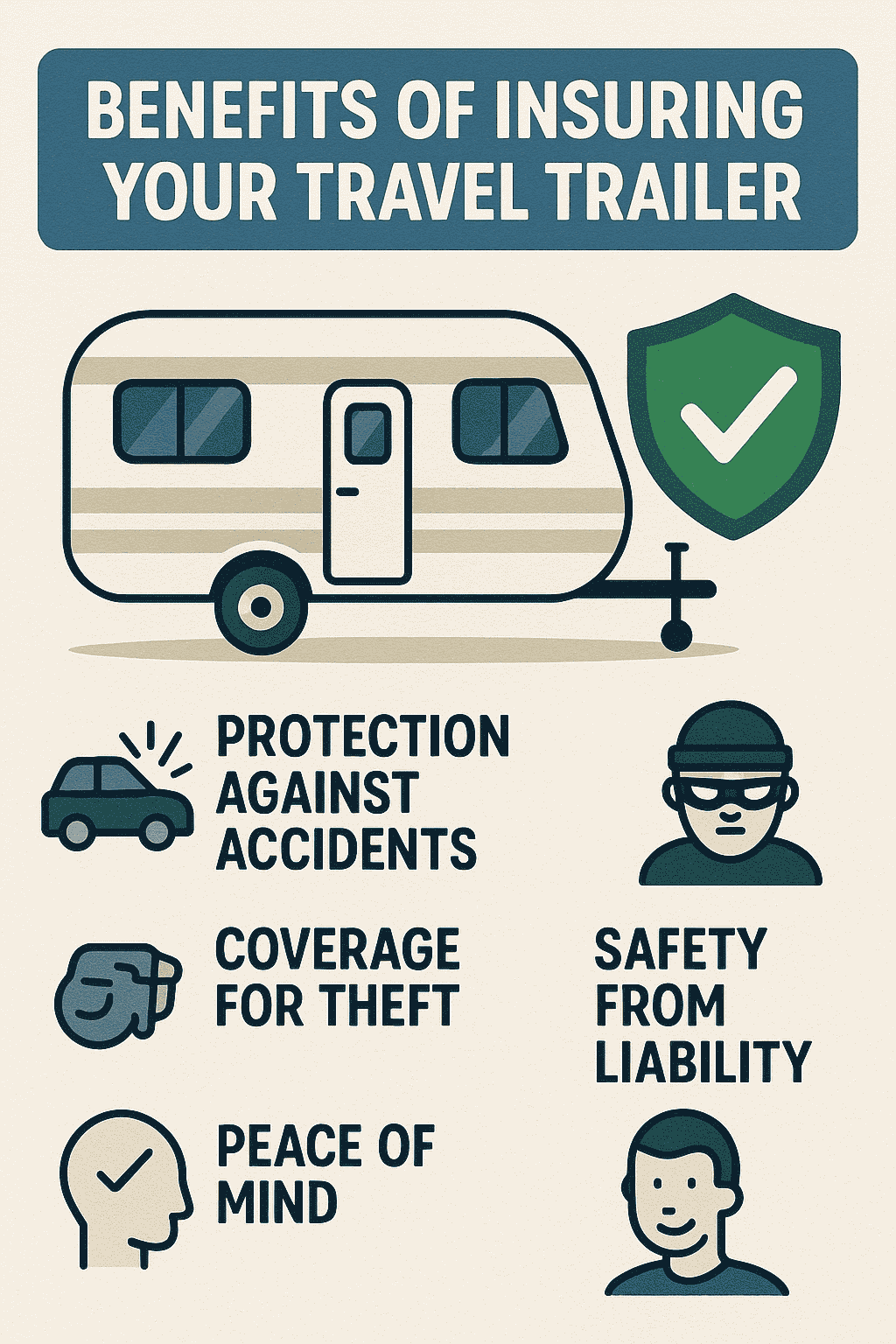
Choosing to insure your pop-up camper delivers numerous advantages beyond mere compliance with potential legal requirements. First and foremost, a comprehensive pop-up camper insurance policy provides invaluable peace of mind during your travels.
When you’re exploring remote locations or camping in unfamiliar territories, knowing that your tent trailer is protected against various risks allows you to fully enjoy your adventure without constant worry. Insurance coverage for your pop-up protects against theft, which is unfortunately common with these portable, easily towable units. Additionally, proper trailer insurance safeguards your personal belongings stored inside the camper, which your auto insurance or home insurance policies might exclude or severely limit coverage for.
Many insurance providers offer specialized pop-up tent trailer insurance packages that include coverage for awnings, attachments, and even camping equipment that standard policies might not cover. Finally, liability coverage within your pop-up camper insurance protects you if someone is injured in or around your trailer, potentially saving you from devastating personal liability claims.
When Your Auto Insurance Isn’t Enough
Many pop-up camper owners mistakenly believe their auto insurance policy fully covers their travel trailer. While it’s true that your car insurance typically provides some basic liability coverage when your pop-up is being towed, this coverage is often extremely limited. Your auto insurance policy generally covers only damage your trailer might cause to another vehicle or property while being towed, but offers little to no protection for the trailer itself if it’s damaged, vandalized, or stolen.
Additionally, most auto insurance policies don’t extend coverage to your pop-up camper when it’s parked or in storage—leaving your investment completely vulnerable during these times. The personal possessions inside your trailer are typically not covered by your auto insurance at all, creating a significant coverage gap. Furthermore, liability issues that arise when your pop-up is parked and being used as accommodation—such as if a visitor trips and falls inside your camper—generally fall outside the scope of auto insurance coverage.
For these reasons, dedicated pop-up camper insurance or travel trailer insurance is essential to properly protect both your investment and yourself from potential financial hardship.
How Much Does Pop-Up Camper Insurance Cost?
Understanding the cost of pop-up camper insurance is essential for budgeting properly for your outdoor adventures. Unlike motorhome insurance, which can be quite expensive, insuring a pop-up or tent trailer is generally much more affordable, making it an accessible option for most camper owners. The insurance cost for protecting your travel trailer varies based on numerous factors, but having a clear understanding of what influences these rates can help you make informed decisions about your coverage needs while managing your camping budget effectively.
Factors Affecting Trailer Insurance Rates
Several key elements influence how much you’ll pay to insure your pop-up camper. The age and value of your travel trailer significantly impact your insurance rates—newer and more expensive models typically cost more to insure because they would be costlier to repair or replace. The make and model of your pop-up also affect insurance premiums, as some brands have better safety records or lower repair costs than others. Your personal usage patterns matter too; if you use your camper frequently throughout the year rather than just seasonally, you may face higher rates due to increased exposure to risk.
The geographical areas where you primarily travel with your pop-up camper can substantially impact your insurance cost, with regions prone to severe weather, high theft rates, or remote locations potentially leading to premium increases. Your driving history and claims record will factor into your trailer insurance rates as well, with clean records typically earning lower premiums.
The coverage limits and deductible amounts you select naturally affect your costs—higher coverage limits increase premiums while higher deductibles generally lower them. Additionally, insurance providers consider your experience level with towing and operating pop-up campers, sometimes offering discounts for experienced RV owners or those who have completed safety courses focused on proper towing techniques.
Average Insurance Costs for Pop-Up Campers
While rates vary based on the factors mentioned above, pop-up camper insurance is generally quite affordable compared to other kinds of insurance. On average, basic liability insurance for a pop-up camper might cost between $200 and $400 annually, making it a relatively small investment for the protection provided.
For more comprehensive coverage that includes collision coverage, comprehensive coverage, and protection for your personal belongings, you might expect to pay between $500 and $800 per year. This more robust travel trailer insurance provides significantly more protection, covering incidents like theft, vandalism, and damage from natural disasters. Premium pop-up tent trailer insurance packages that include additional features like vacation liability, emergency expense coverage, and full replacement value protection typically range from $800 to $1,200 annually.
Insurance costs for vintage or specialty pop-up campers may be higher or require specialized policies from insurance providers who understand their unique value and repair requirements. It’s worth noting that many insurance companies offer significant discounts when you bundle your pop-up camper insurance with existing auto insurance or home insurance policies, potentially reducing your overall insurance cost substantially.
Ways to Save on Your Pop-Up Camper Insurance
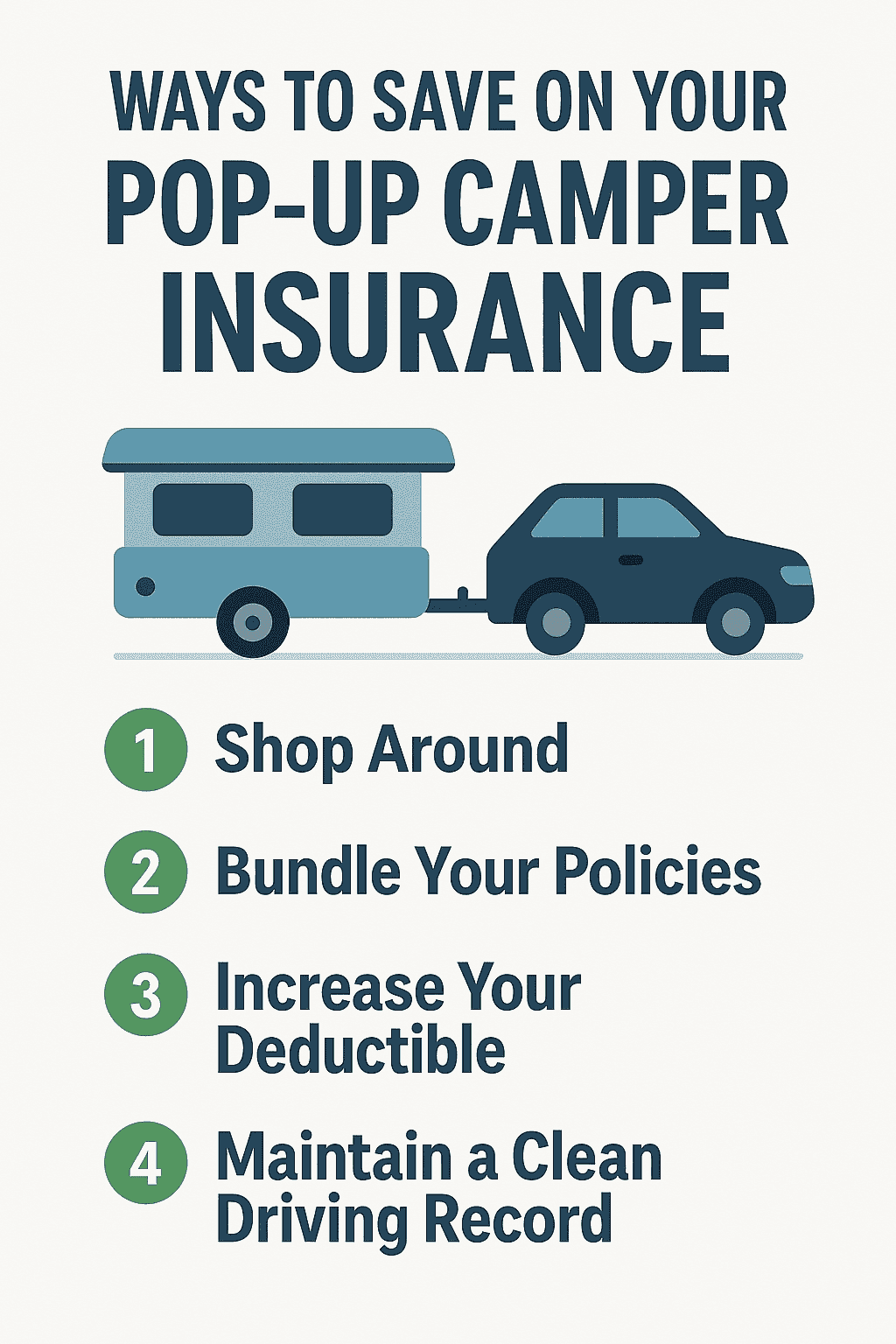
There are numerous strategies to reduce your pop-up camper insurance premiums without sacrificing essential coverage. One of the most effective methods is bundling your trailer insurance with other policies from the same insurance company, such as your auto insurance, home insurance, or motorhome insurance. Most insurance providers offer substantial multi-policy discounts that can significantly reduce your overall insurance costs.
Increasing your deductible is another common approach to lowering premiums—by agreeing to pay more out-of-pocket in the event of a claim, you can reduce your regular insurance payments.
Many insurance companies offer discounts for safety features such as anti-theft devices, wheel locks, or tracking systems installed on your pop-up camper. Seasonal insurance policies can be cost-effective if you only use your pop-up during specific months of the year, allowing you to pay for coverage only when your trailer is actually in use.
Membership in RV clubs or camping associations often qualifies you for special group rates with certain insurance providers. Maintaining a clean driving record and claims history is perhaps the most important long-term strategy for keeping your insurance rates low. Finally, don’t underestimate the value of shopping around—comparing trailer insurance quotes from multiple insurance providers is crucial for finding the best combination of coverage and value.
Many insurance agents specialize in RV and travel trailer insurance and can help identify discounts and coverage options you might not discover on your own.
What Does Pop-Up Camper Insurance Coverage Include?
Understanding exactly what your pop-up camper insurance covers is crucial for ensuring you have adequate protection. Unlike standard auto insurance, specialized pop-up camper insurance offers tailored protection designed specifically for the unique risks associated with travel trailers.
A comprehensive policy typically includes multiple coverage types that work together to protect both your investment in the camper itself and your liability exposure when using it. Knowing these coverage components helps you make informed decisions about the kind of insurance protection that best suits your camping lifestyle and risk tolerance.
Comprehensive and Collision Coverage for Travel Trailers
Comprehensive and collision coverage form the backbone of any robust pop-up camper insurance policy. Collision coverage specifically protects your travel trailer if it’s damaged in an accident while being towed by your vehicle. This might include situations where you’re involved in a traffic accident, your pop-up jackknifes while towing on difficult terrain, or your trailer tips over during transportation.
Comprehensive coverage, on the other hand, protects against almost everything else that might damage your pop-up when it’s not in a collision. This includes protection against theft of your entire trailer, vandalism to your camper while parked at a campground or in storage, damage from falling objects like tree limbs, fire damage, and weather-related incidents such as hail, wind, or flood damage. Together, these coverages ensure your pop-up camper is protected in virtually any scenario. Many insurance companies offer options for how your trailer would be valued in case it’s totaled—you can typically choose between actual cash value (which factors in depreciation) or replacement value coverage (which would provide funds to purchase a new, similar model).
The latter costs more but provides much better protection, especially for newer pop-up campers. Your deductible choice for these coverages significantly impacts both your premium costs and out-of-pocket expenses when filing a claim.
Liability Coverage for Your Pop-Up
Liability coverage is a critical component of pop-up camper insurance that many owners overlook when evaluating their insurance needs. While your auto insurance policy typically provides liability coverage while you’re towing your pop-up, this protection generally ends once your camper is unhitched. Dedicated liability insurance for your pop-up protects you if someone is injured in or around your trailer when it’s set up at a campsite.
This vacation liability coverage becomes essential if, for instance, a visitor trips on your camper steps, falls inside your pop-up, or is injured by an awning or attachment. Beyond personal injury, liability coverage also protects you if your parked travel trailer somehow causes property damage to neighboring campsites or facilities. The financial protection provided by this liability coverage can be substantial, potentially saving you from devastating legal expenses and settlement costs that might otherwise come directly from your personal assets. Most insurance providers offer various liability coverage limits for pop-up camper insurance, typically starting around $100,000 and ranging up to $500,000 or more. Higher limits naturally increase your premium but provide significantly better protection against potentially catastrophic liability claims.
This coverage is particularly important in today’s litigious society, where medical costs and legal settlements can quickly escalate into hundreds of thousands of dollars.
Additional Coverage Options for Tent Trailers
Beyond the standard comprehensive, collision, and liability coverage, insurance companies offer numerous specialized coverage options designed specifically for pop-up and tent trailers. Personal belongings coverage protects the items you keep inside your camper, from clothing and camping gear to electronics and kitchenware.
This coverage is particularly valuable since neither your auto insurance nor your home insurance typically extends full protection to these items when they’re in your travel trailer. Emergency expense coverage reimburses costs if your camping trip is interrupted due to covered damage to your pop-up, potentially including hotel stays, transportation, and meals while your trailer is being repaired. Campsite and vacation coverage provides additional liability protection specifically for incidents that occur while you’re using your pop-up as vacation accommodation. Awning coverage specifically protects these vulnerable attachments, which are commonly damaged in wind storms and can be expensive to repair or replace. Some insurance providers offer roadside assistance packages tailored for travel trailers, covering towing, tire changes, and other emergency services when you’re on the road. For those who use their pop-up campers in remote locations, total loss replacement coverage ensures you can replace your trailer if it’s damaged beyond repair in areas far from help.
Insurance companies increasingly offer specialized packages for vintage or custom pop-up campers that recognize their unique value and repair requirements. Finally, some insurers now provide coverage for rental reimbursement if your trailer needs extended repairs, allowing you to continue your planned camping trips in a rental unit while your pop-up is being fixed.
How to Get an RV Insurance Quote for Your Pop-Up Trailer
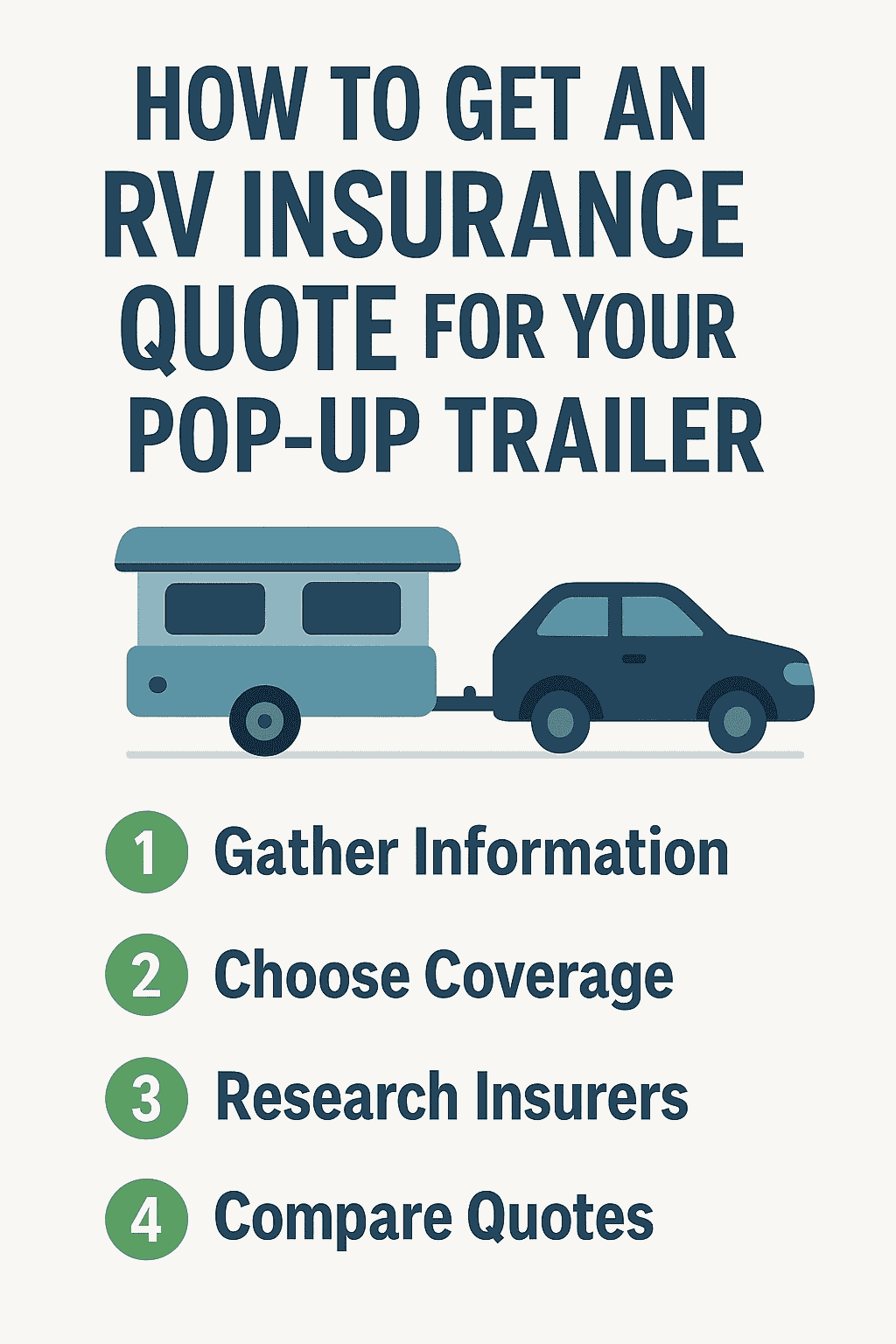
Securing the right insurance for your pop-up camper starts with obtaining and comparing quotes from different insurance providers. The process of getting an insurance quote for your travel trailer requires some preparation, but taking the time to gather accurate information and explore multiple options can result in better coverage and significant cost savings.
Whether you’re insuring a new pop-up camper or looking to switch insurance companies for your existing trailer, understanding how to effectively navigate the quote process is essential for finding the best combination of coverage, service, and value.
Required Information for Insurance Quotes
To obtain accurate insurance quotes for your pop-up camper, you’ll need to provide several key pieces of information to potential insurance providers. First and foremost, the make, model, year, and serial number of your travel trailer are essential for accurately determining its value and insurance risk. You’ll need details about your tow vehicle, including its make, model, year, and your auto insurance policy information, as these factors influence how your pop-up will be used. Insurance companies will ask about your anticipated usage patterns—how frequently you’ll use the camper, typical trip duration, and whether you use it seasonally or year-round. Information about where the pop-up will be stored when not in use is important for assessing theft and vandalism risk.
Your driving history and any prior insurance claims related to RVs or trailers will significantly impact your rates. Details about any safety features, anti-theft devices, or aftermarket modifications to your pop-up camper help insurers evaluate both risk and replacement value. The insurance company will need personal information including your age, address, and credit history (in states where this is permitted for insurance rating). Finally, you should be prepared to specify your desired coverage types, limits, and deductible preferences to receive the most accurate quote possible. Having this information readily available when contacting insurance agents or using online quote tools will streamline the process and result in more accurate pricing estimates.
Comparing Pop-Up Camper Insurance Quotes
Once you’ve gathered several trailer insurance quotes, effective comparison requires looking beyond just the bottom-line premium costs. Start by ensuring each quote includes similar coverage types and limits—comparing a basic liability-only policy from one company against a comprehensive policy from another won’t give you an accurate price comparison. Pay particular attention to the deductible amounts in each quote, as lower premiums often come with higher deductibles that could significantly impact your out-of-pocket costs if you need to file a claim. Examine how each insurance company calculates the value of your pop-up in case of a total loss—replacement value coverage is typically more expensive but provides much better protection than actual cash value, especially for newer trailers.
Look for differences in coverage exclusions and limitations across policies, particularly regarding personal belongings coverage, awning protection, and vacation liability. Consider each insurance provider’s reputation for customer service and claims handling by researching online reviews, checking their ratings with independent agencies like J.D. Power or A.M. Best, and asking for recommendations from fellow RV owners. Evaluate available discounts, particularly for bundling with existing policies, safety features, or membership organizations. Finally, consider the flexibility of each policy in terms of adjusting coverage as your needs change or if you upgrade to a different travel trailer in the future.
Taking time to thoroughly compare these aspects of each pop-up camper insurance quote will help you identify the policy that truly offers the best overall value.
Online vs. Agent-Based Insurance Shopping
When shopping for pop-up camper insurance, you have two primary channels—online direct insurance providers and traditional insurance agents. Online insurance shopping offers distinct advantages: it’s convenient and accessible 24/7, allows for quick comparison of multiple quotes, often provides immediate policy issuance, and frequently features lower premiums due to reduced overhead costs.
Many online insurance providers have developed specialized tools specifically for RV and travel trailer insurance quotes that make the process straightforward. However, working with an experienced insurance agent brings different benefits, particularly for first-time pop-up camper owners.
A knowledgeable agent can provide personalized guidance about coverage options you might not have considered, identify potential coverage gaps between your auto insurance and travel trailer insurance, and help you understand policy language and exclusions that might be confusing in standard documentation. Agents who specialize in RV insurance often have deep knowledge about the unique needs of pop-up camper owners and can
Pop-Up Camper Essentials

Pop-Up Camper Door Lock with Keys Black Aluminum Lockset Fits RVs & Trailers
Pop-Up Camper Door Lock with Keys Black Aluminum Lockset Fits RVs &…

METOWARE Trailer Coupler Lock Universal Adjustable Heavy-Duty Steel Trailer Hitch Lock, Anti Theft Trailer Ball Lock Towing Lock for Towing Trailer Security Fits 1-7/8",2”, 2-5/16" Coupler Yellow
METOWARE Trailer Coupler Lock Universal Adjustable Heavy-Duty Steel Trailer Hitch Lock, Anti…

QZATTCAEN Keyed-Alike Locking T-Handle Kit for Truck Camper Shell/Cap & Topper – Black T-Handle Lock Set with Door Compatibility (Left)
QZATTCAEN Keyed-Alike Locking T-Handle Kit for Truck Camper Shell/Cap & Topper -…